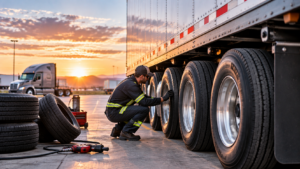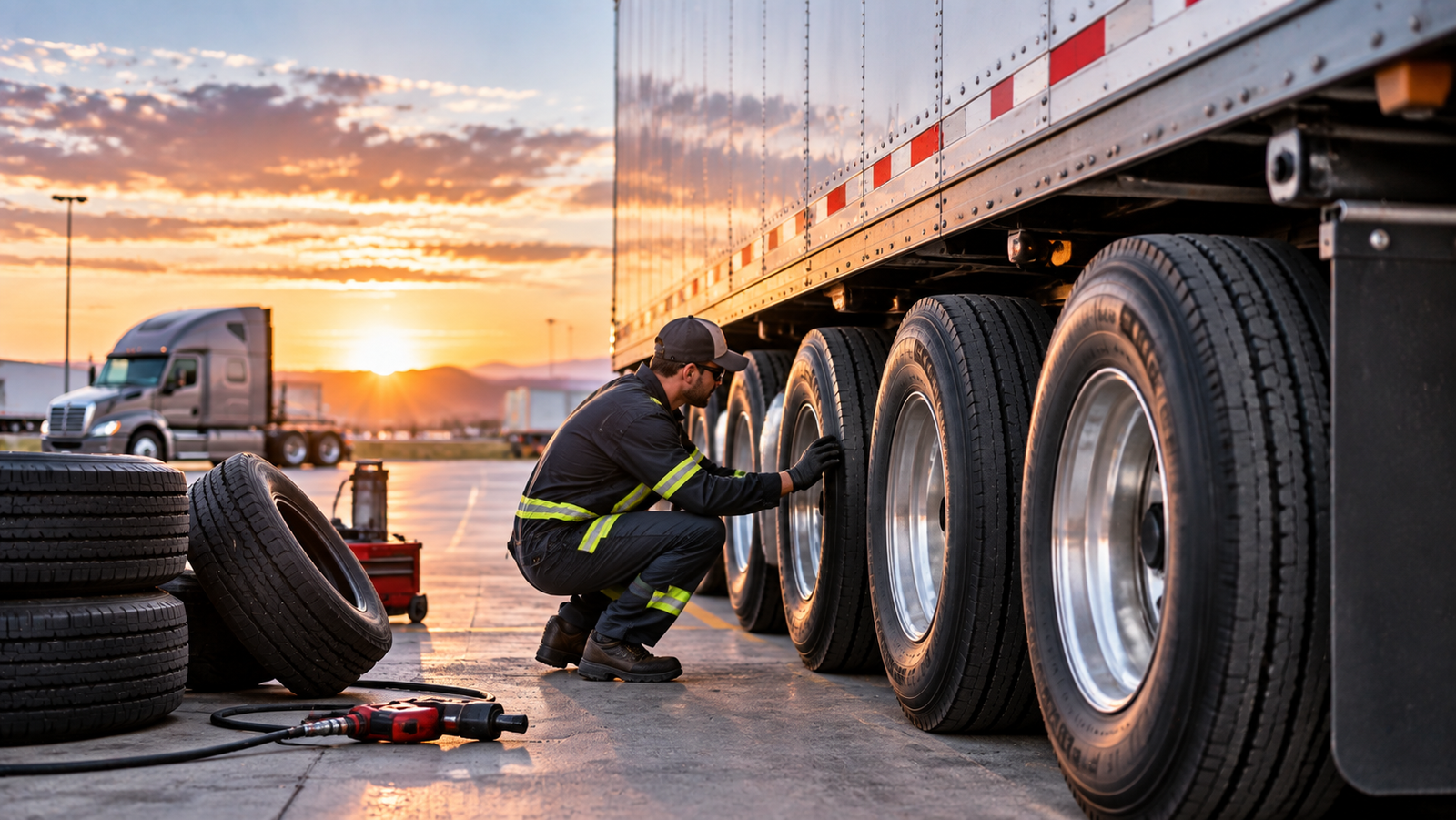
A blowout at highway speed is one of the most dangerous things that can happen in a loaded truck. It can damage the trailer, the fenders and the tires around it, and it can put you and everyone nearby at risk. The good news is that most blowouts don’t come out of nowhere. They usually start as a slow problem, like low pressure, an overloaded axle or a damaged sidewall, that builds until the tire fails.
Here’s what causes blowouts and the simple habits that help prevent them.
Why Semi Truck Tires Blow Out
Heat is the main enemy. When a tire runs underinflated or overloaded, the sidewalls flex more than they should. That flexing builds heat, and heat breaks down the rubber and the bond between the tire’s internal layers. After enough miles, the tire gives way.
The most common causes are:
- Underinflation, the single biggest contributor
- Overloading an axle beyond the tire’s rated capacity
- Road hazards such as debris, potholes and curbs
- Worn or damaged tires with cuts, bulges or exposed cords
- Mismatched duals, where one tire ends up carrying more than its share
1. Check Pressure Every Day, And Check It Cold
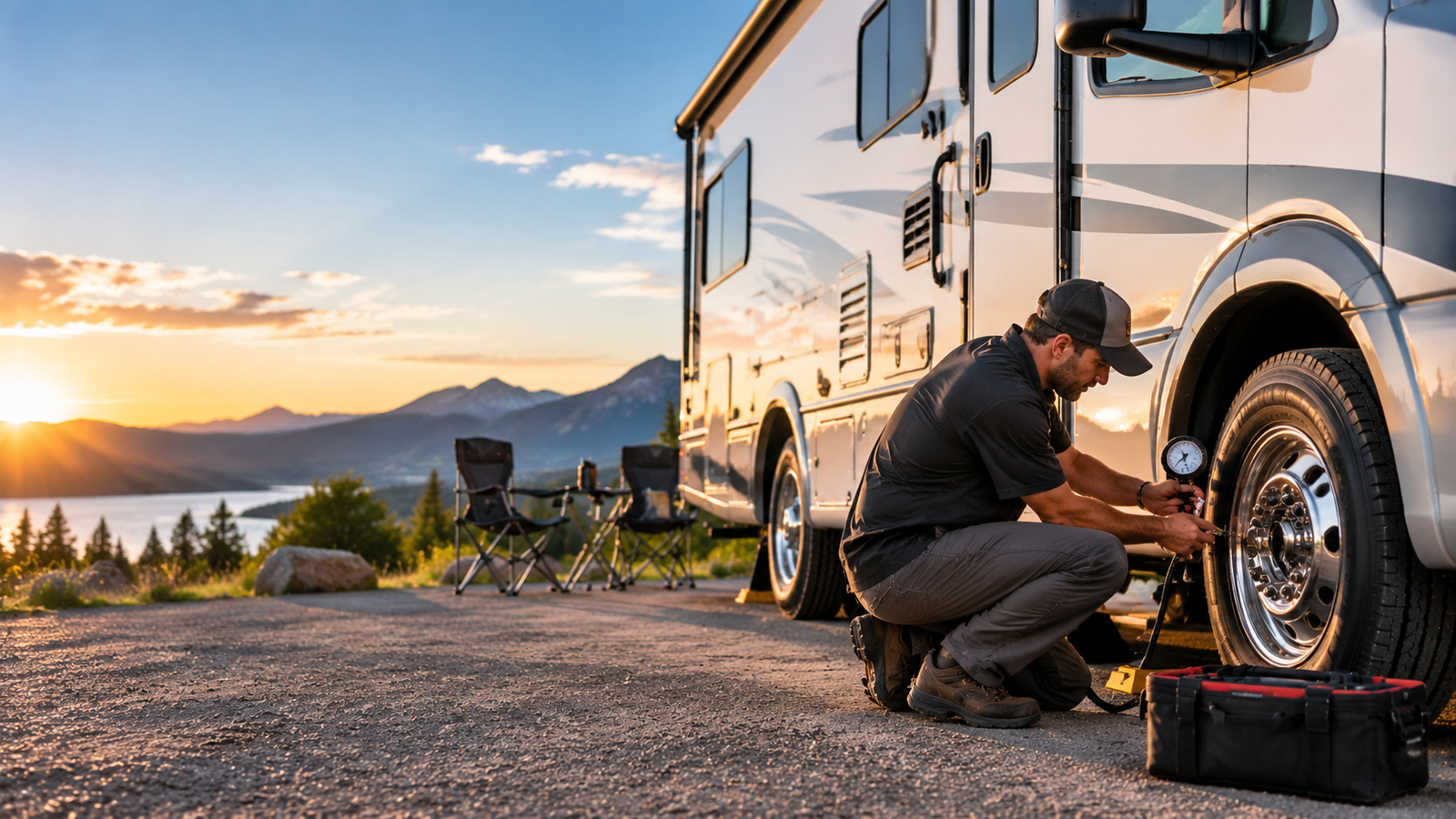
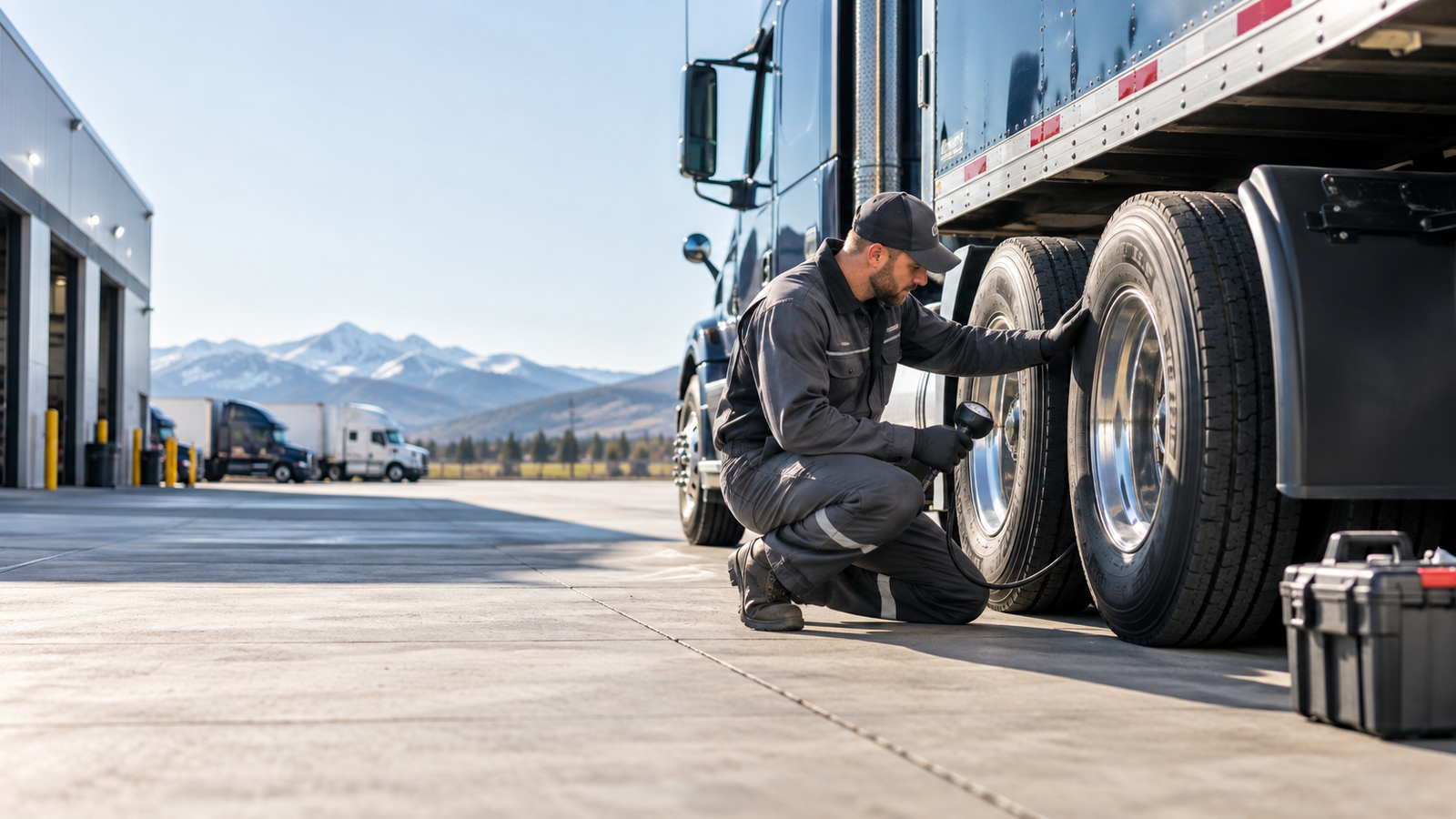
Make a calibrated gauge part of every pre-trip inspection. Check pressure before you drive, while the tires are cold, because readings taken after a run will be higher than normal. Thumping a tire with a bat or mallet can spot a flat, but it won’t tell you a tire is 20 PSI low, and that’s exactly the kind of loss that leads to a blowout.
Use the inflation pressure recommended for your load, not simply the maximum printed on the sidewall. If a tire keeps losing air, don’t just top it off. Have it looked at.
2. Keep Your Duals Matched
Dual tires need to share the load evenly. If one tire is lower in pressure or has noticeably less tread than its partner, the other tire carries more of the weight and runs hotter. Keep both tires in a dual set close in pressure and tread depth, and check both whenever you check one.
3. Don’t Overload Your Axles
Every tire has a maximum load rating. Running over it, even for a single trip, speeds up heat build-up and internal damage. Know your axle weights and make sure your tires are rated for the load you’re actually hauling.
4. Inspect Tread And Sidewalls
Take a close look at every tire during your walk-around. Watch for:
- Bulges or bubbles in the sidewall
- Cuts, gouges or exposed cords
- Uneven or irregular wear patterns
- Objects stuck in the tread
Also check tread depth. Federal rules (FMCSA) require at least 4/32 of an inch on steer tires and 2/32 of an inch on all other tires. Those are legal minimums, not goals, and many fleets replace tires well before they reach them.
5. Plan For Heat And Long Runs
Hot pavement and long stretches without a stop add stress to every tire. Summer runs through inland San Diego County and out toward the desert are hard on rubber. On hot days, check your tires at every stop and look for signs of trouble like a tire that’s noticeably hotter than the others.
6. Keep Alignment And Suspension In Shape
Poor alignment and worn suspension parts cause irregular wear, which weakens a tire over time. If you notice the truck pulling, feathered wear on the steer tires, or cupping on the drives, get alignment and suspension checked.
7. Don’t Ignore The Warning Signs
Vibration, pulling to one side, a thumping noise or a tire pressure alert can all mean a tire is in trouble. Pull over somewhere safe and inspect it before it gets worse.
What To Do If A Blowout Happens
If a tire does blow out, stay calm:
- Hold the steering wheel firmly and keep the truck straight
- Avoid slamming on the brakes
- Ease off the accelerator and let the truck slow down gradually
- Once you’re under control, signal and pull as far off the road as safely possible
- Turn on your hazards and set out your warning triangles
Don’t try to change a heavy-duty tire on the shoulder yourself. It’s dangerous work next to live traffic, and it needs the right equipment.
Need Help On The Road?
If a tire problem has you stuck anywhere in San Diego County, SD Roadside Heavy Tires is available 24/7. Call 619-212-1271 and we’ll send a mobile unit to your location, or request service online.