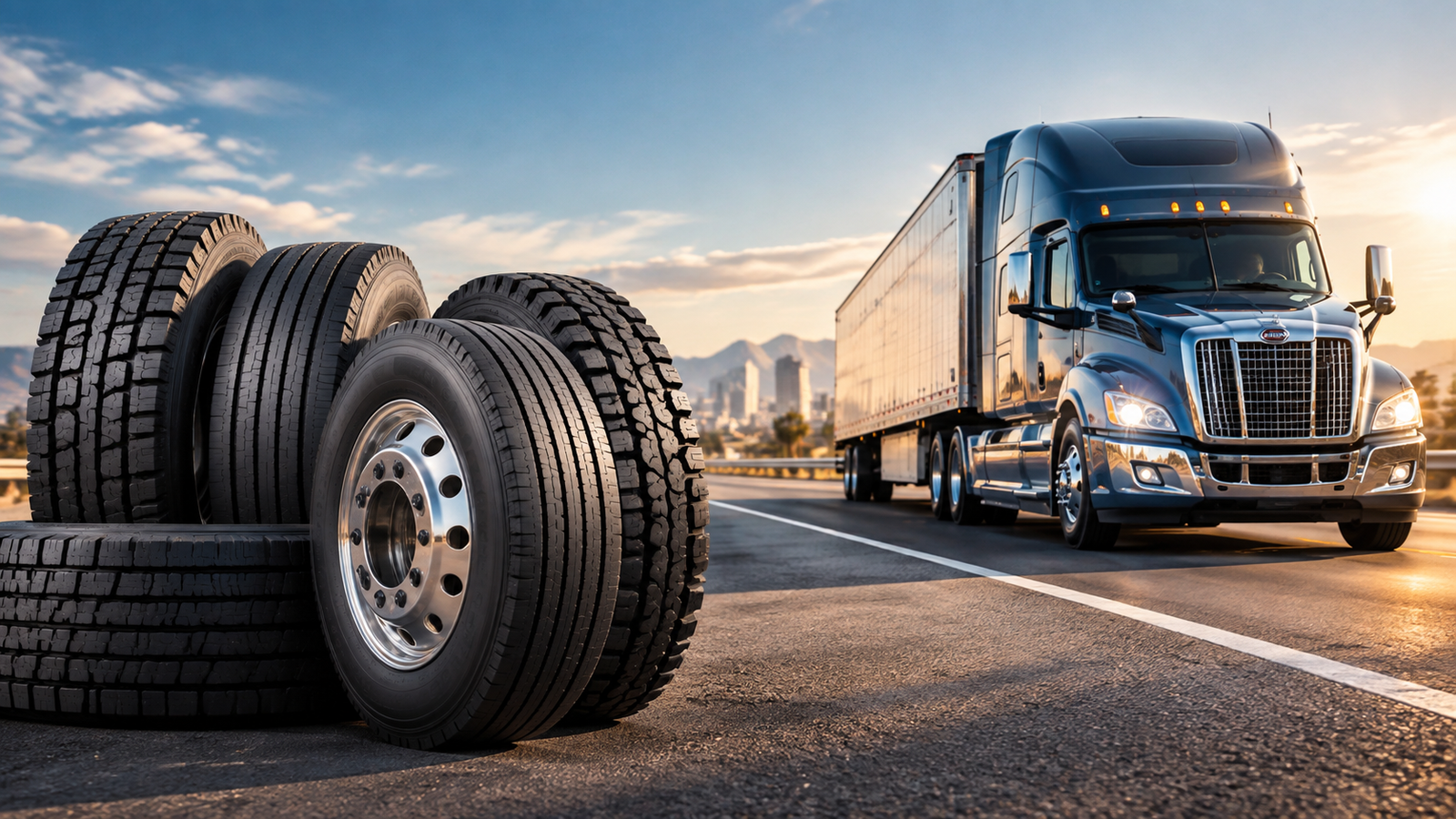
There’s no single “best” commercial truck tire. The right tire depends on where it goes on the truck, the kind of miles you run and the loads you carry. A tire that’s excellent on a long-haul steer axle can be the wrong choice for a drive axle in regional stop-and-go work.
This guide covers what matters when you’re choosing tires for a truck or a fleet.
Start With Wheel Position
Commercial truck tires are designed for a specific position, and using the right tire in the right place makes a big difference in safety, wear and cost.
Steer Tires
Steer tires handle steering precision and stability. They usually have a rib tread pattern, which gives even wear and responsive handling. Because a steer tire failure is so dangerous, this is not the place to cut corners. Choose a quality tire and keep a close eye on its condition.
Drive Tires
Drive tires put the engine’s power to the road, so traction is the priority. They typically have deeper lug or block tread patterns that grip in wet conditions and on grades. Deeper tread also usually means longer tread life.
Trailer Tires
Trailer tires carry weight, and they take a lot of scuffing from tight turns and backing into docks. They’re usually designed to resist irregular wear and damage from scrubbing. Low rolling resistance options are popular here because trailer tires have a big effect on fuel use across a fleet.
Match The Tire To Your Application
Tire makers design tires for different kinds of work:
- Long haul: mostly highway miles at steady speeds. Look for tires built for long tread life and fuel efficiency.
- Regional: a mix of highway and local roads with more turning and stops. These tires are built to resist scrubbing and irregular wear.
- Mixed service / on-off road: construction and job sites. These need tougher casings and chip-resistant tread.
Be honest about how your trucks are actually used. A long-haul tire running regional routes can wear out much faster than expected.
Check Load Range And Size
Every tire has a load index and a load range that tell you how much weight it can safely carry at a given pressure. Make sure your tires are rated for your real axle weights, and keep sizes consistent across dual assemblies so each tire carries its share of the load.
Fuel Efficiency vs. Traction
Low rolling resistance tires can reduce fuel use, which adds up quickly across a fleet. The trade-off is sometimes less traction or tread depth. For many operations, a fuel-efficient tire on the trailer and steer positions paired with a traction-focused drive tire is a good balance.
New Or Retread?
Retreads are widely used on drive and trailer positions and can lower cost per mile when the casings are in good shape. Many fleets choose new tires for steer positions. A good retread program depends on caring for your casings, which means proper inflation and pulling tires before they’re damaged beyond repair.
Think In Cost Per Mile, Not Price Per Tire
The cheapest tire up front isn’t always the cheapest over its life. Consider tread life, fuel economy, how well the casing holds up for retreading, and the cost of downtime if a tire fails early. A quality tire that lasts longer and fails less often usually costs less in the end.
Brands We Work With
We work with trusted manufacturers including Michelin, Goodyear, Bridgestone and Continental. Each offers steer, drive and trailer tires for different applications. The right model depends on your routes and loads, so tell us how you run and we’ll point you in the right direction.
Need Help On The Road?
If a tire problem has you stuck anywhere in San Diego County, SD Roadside Heavy Tires is available 24/7. Call 619-212-1271 and we’ll send a mobile unit to your location, or request service online.