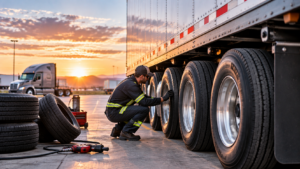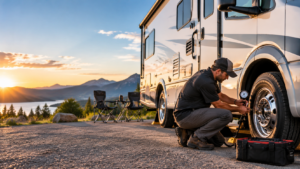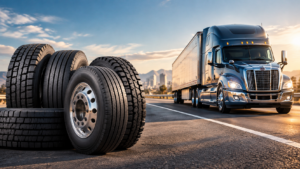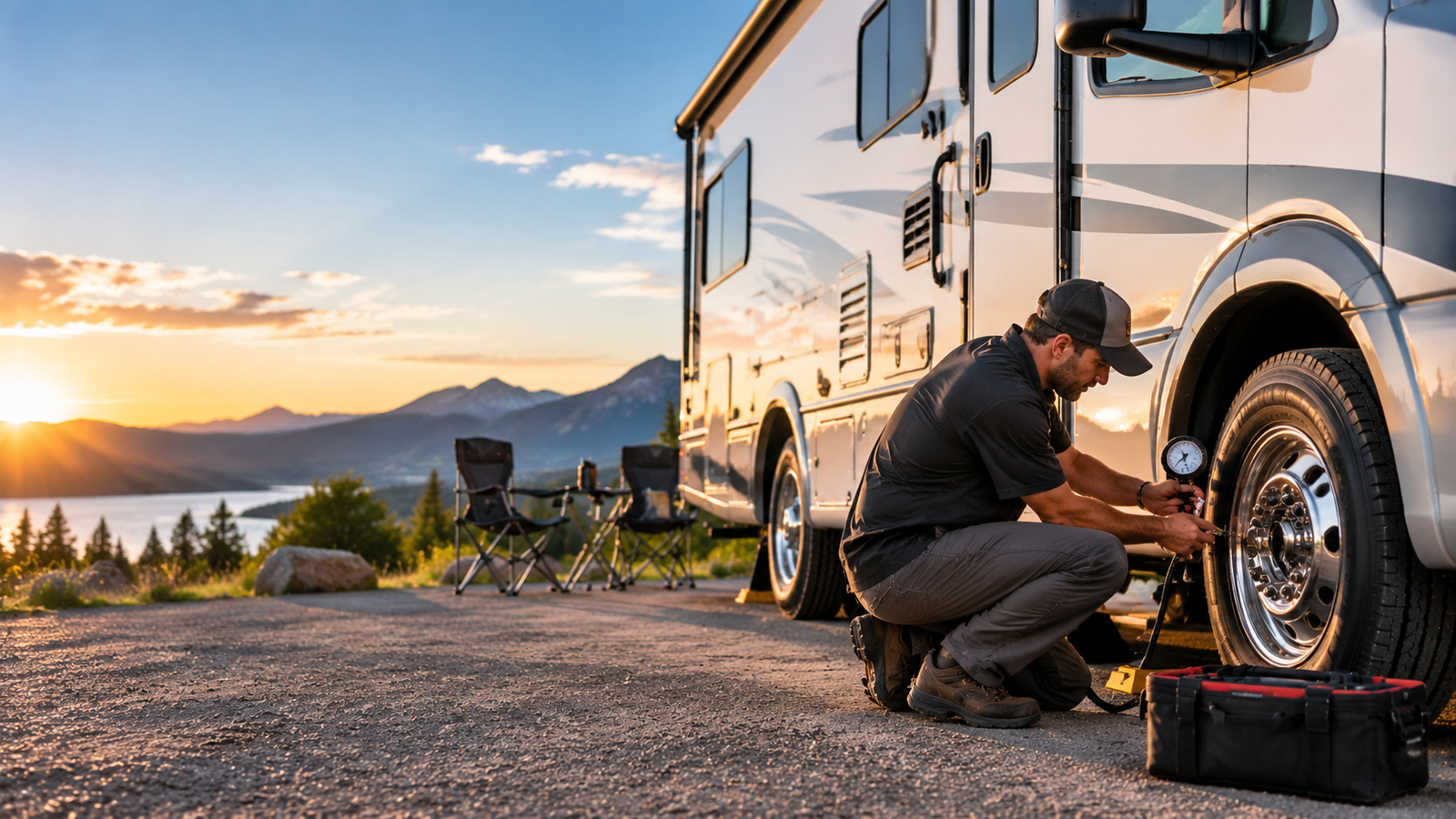
Trailer tires are easy to overlook. They’re behind you, out of sight, and they don’t steer or drive. But a failed trailer tire can damage the trailer, take out the tire next to it and leave you stranded. Knowing when to replace them saves money and downtime.
Here are the clear signs it’s time for new trailer tires.
1. The Tread Is Too Shallow
For commercial trailers, federal rules (FMCSA) require at least 2/32 of an inch of tread depth in the major grooves. That’s a legal minimum, not a target. As tread wears down, tires become more likely to puncture and lose grip on wet roads.
Measure tread depth in several spots across the tire. If one area is much lower than the rest, that tire has an irregular wear problem.
2. The Wear Is Uneven
Irregular wear is a sign that something else is wrong, and it shortens a tire’s life. Common patterns include:
- Wear on both outer edges: usually underinflation
- Wear down the center: usually overinflation
- Flat spots: often from locked brakes or skidding
- Wear on one side: can point to alignment or axle problems
Replace badly worn tires, and fix the cause so the new ones don’t wear the same way.
3. There’s Visible Damage
Replace a trailer tire right away if you see:
- Bulges or bubbles in the sidewall
- Cuts or gouges deep enough to expose cords
- Separation between the tread and the casing
- Damage to the bead area
These tires can fail without warning and shouldn’t stay in service.
4. The Tire Is Getting Old
Rubber breaks down with age, especially under sun and heat. Look for weather cracking in the sidewalls and between the tread blocks. To find a tire’s age, check the DOT code on the sidewall. The last four digits show the week and year it was made. For example, 1422 means the 14th week of 2022.
Age matters most for trailers that sit for long periods, like travel trailers, boat trailers and seasonal equipment. Many manufacturers recommend replacing these tires after around five to six years regardless of tread. Check your tire maker’s guidance.
5. It Keeps Losing Air
A tire that needs air again and again has a problem, whether it’s a puncture, a bead leak or a bad valve stem. Running a tire underinflated builds heat and can lead to a blowout, so have slow leaks checked instead of just topping them off.
6. Its Dual Partner Failed
When one tire in a dual set blows out, the other tire suddenly carries the full load. Even if it looks fine, it may have been overloaded and damaged inside. Have the remaining tire inspected, and in many cases it’s safest to replace both.
Tips For Replacing Trailer Tires
- Replace in pairs on the same axle so tires wear evenly.
- Match size, type and load rating across dual assemblies.
- Use tires built for trailer service. Travel trailers and utility trailers typically use ST (Special Trailer) tires, while commercial semi trailers use tires designed for trailer positions.
- Check pressure regularly once the new tires are on.
Need Help On The Road?
If a tire problem has you stuck anywhere in San Diego County, SD Roadside Heavy Tires is available 24/7. Call 619-212-1271 and we’ll send a mobile unit to your location, or request service online.